
Abstract
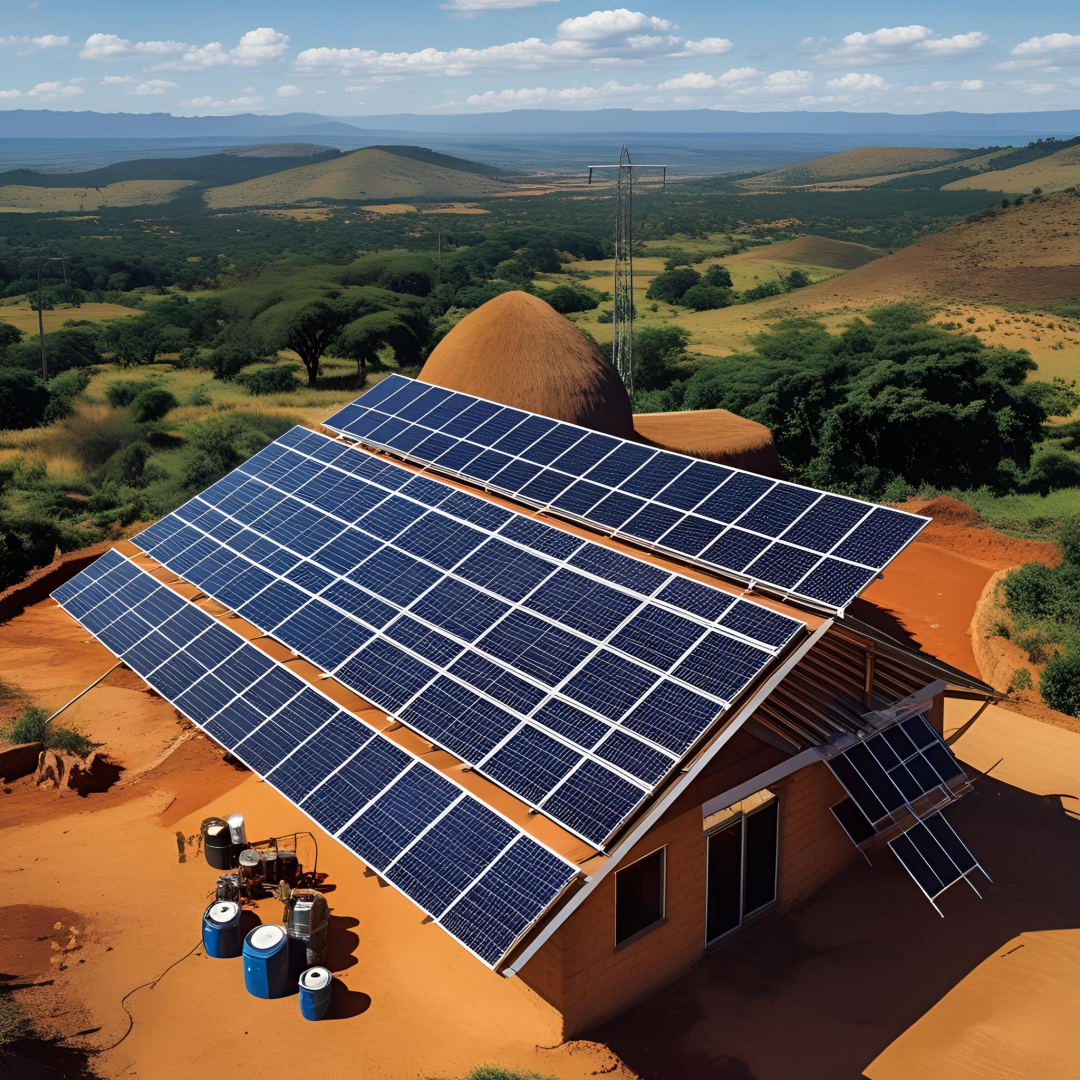
As energy poverty remains a persistent challenge in sub-Saharan Africa, particularly in rural areas, AIPCHAIN has launched a pilot deployment in Kenya to test and demonstrate the scalability of its blockchain- and AI-powered decentralized energy platform. The project aims to accelerate rural electrification through local microgrid deployment, transparent energy trading, and intelligent demand forecasting.
1. Introduction
Despite growing investments in renewable energy across Africa, rural electrification remains an elusive goal for millions. Centralized utility models have proven inadequate in reaching remote areas due to geographic, economic, and infrastructural constraints. Kenya, with its progressive energy policy and robust off-grid solar market, presents an ideal landscape for launching AIPCHAIN’s decentralized energy solution.
2. Why Kenya?
2.1 Enabling Environment
Kenya has emerged as a leader in off-grid solar adoption and mobile-based payments (e.g., M-Pesa), making it fertile ground for blockchain-based energy systems.
2.2 Rural Energy Gaps
Over 25% of the population—primarily in rural and semi-arid regions—remain without reliable access to electricity. These areas suffer from poor grid connectivity, energy theft, and high transmission losses.
3. Scope of the Pilot
3.1 Target Regions: Turkana, Kitui, and parts of Kajiado
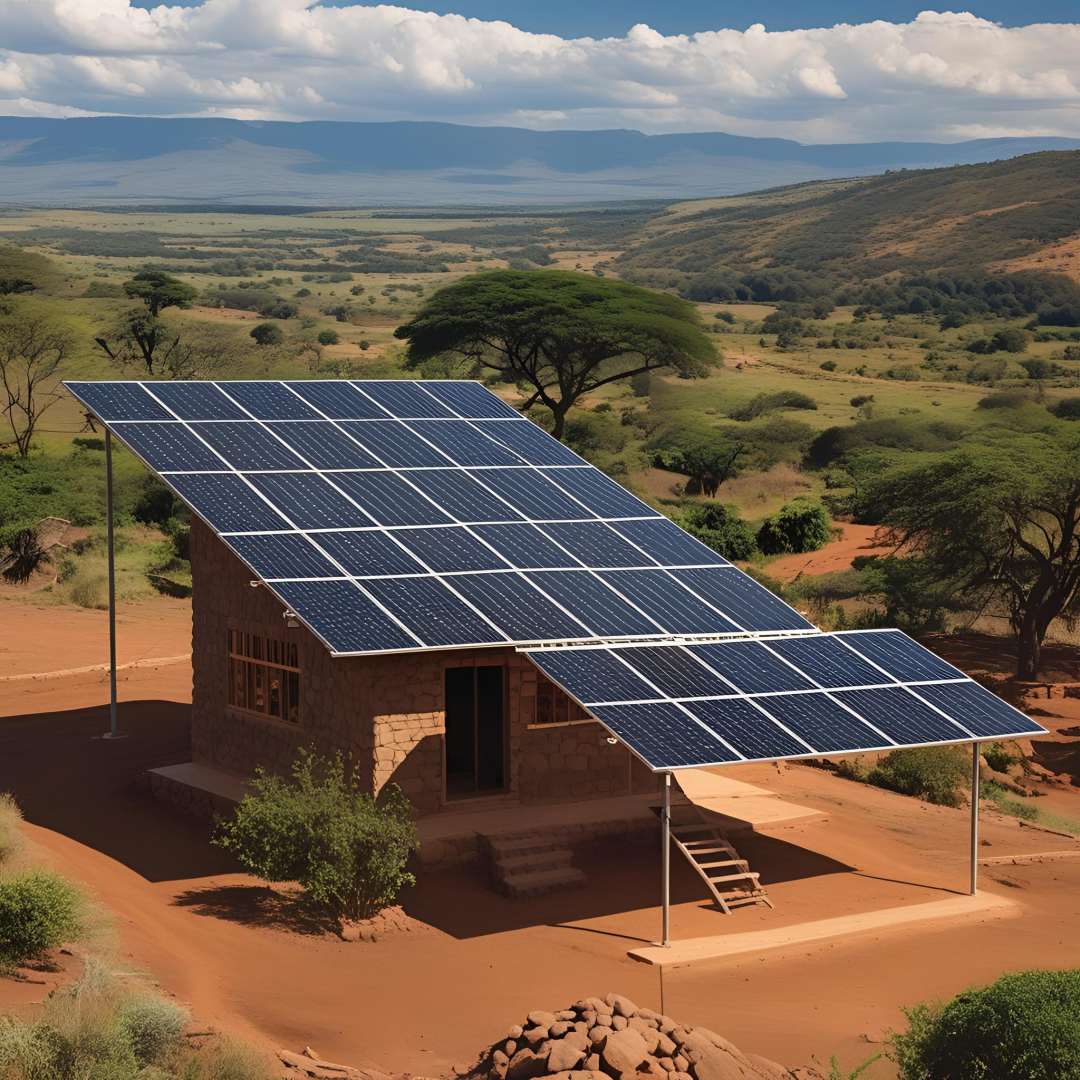
- Deployment of solar-based microgrids
- Integration of smart IoT meters
- Launch of peer-to-peer energy trading via blockchain
- AI modules to predict consumption and optimize pricing
3.2 Community & Stakeholder Participation
The project involves local NGOs, energy co-operatives, renewable energy producers, and mobile payment providers. Training sessions are included to foster digital literacy.
4. Core Technologies Deployed
- Blockchain Ledger
- Smart Contracts
- AI Forecasting Engine
- Mobile Integration
5. Expected Benefits
| Impact Area | Description |
|---|---|
| Energy Access | Off-grid communities gain first-time access |
| Decentralization | Reduced dependence on national utilities |
| Economic Empowerment | Villagers become energy producers and sellers |
| Transparency | Blockchain builds trust and prevents manipulation |
| Cost Efficiency | Local generation lowers energy costs |
6. Challenges and Mitigation Strategies
| Challenge | Mitigation Strategy |
|---|---|
| Digital adoption in rural areas | Conduct training and localize interfaces |
| Regulatory uncertainty | Partner with Kenya's EPRA |
| Infrastructure durability | Use modular, low-maintenance designs |
| Token liquidity | Integrate with mobile payment platforms |
7. Long-Term Vision
Following validation in Kenya, AIPCHAIN will expand to Uganda, Rwanda, and Nigeria. The platform will integrate carbon credit systems, DeFi markets, and a decentralized energy analytics ecosystem.
Conclusion
The AIPCHAIN Kenya pilot exemplifies how blockchain and AI can build an inclusive and sustainable energy future for underserved regions. Kenya is the foundation for scalable, decentralized energy systems across Africa and beyond.
References
- Kenya Energy and Petroleum Regulatory Authority (EPRA)
- Kenya Off-Grid Solar Access Project (KOSAP)
- IRENA – Africa Energy Outlook
- UN SDG 7 Reports
- AIPCHAIN Technical Whitepaper