
Introduction
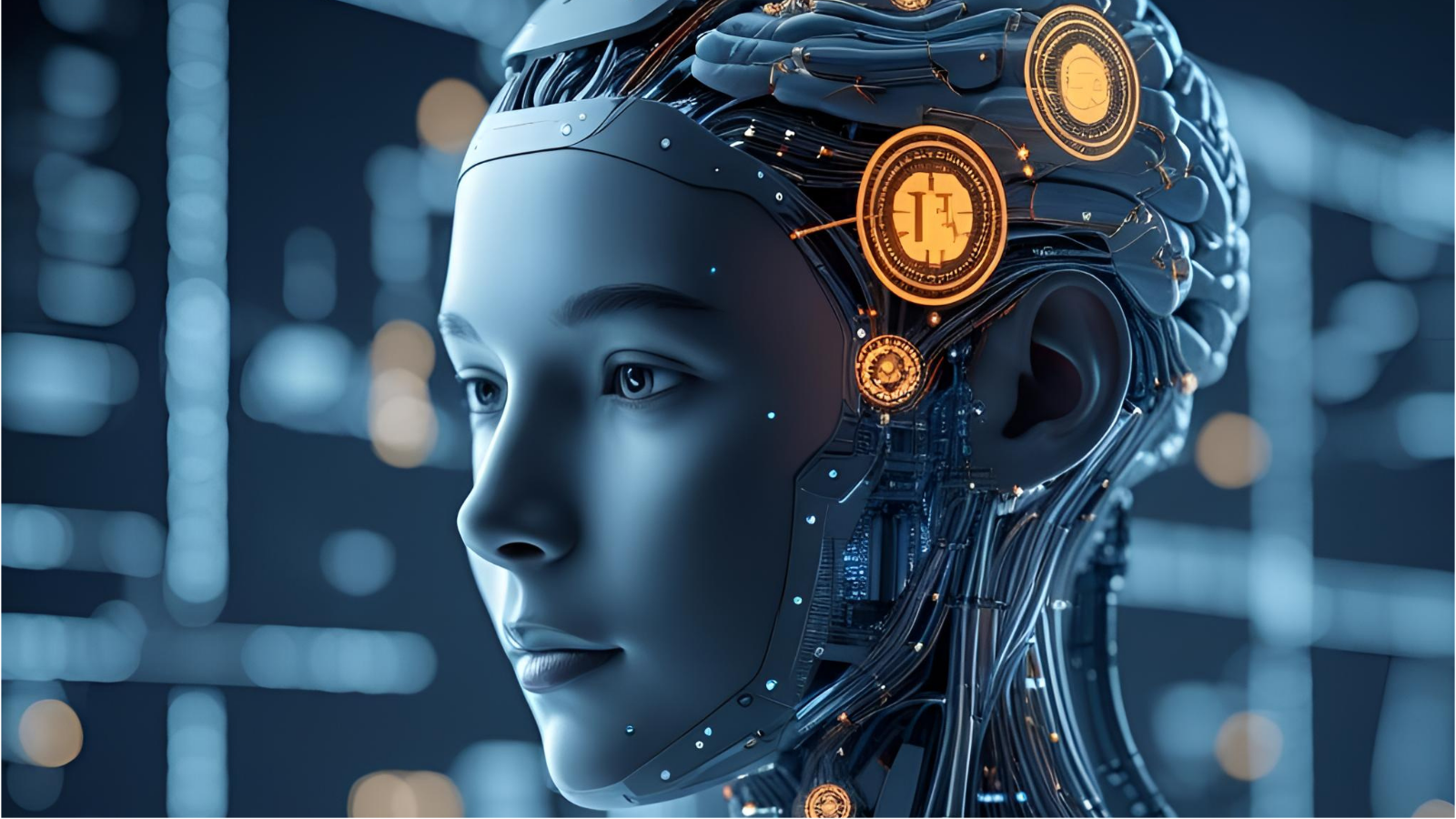
In the era of global energy transition and digital transformation, the convergence of Artificial Intelligence (AI) and blockchain technology is reshaping how energy is produced, distributed, priced, and consumed. Within this paradigm, AIPCHAIN emerges as a next-generation decentralized energy infrastructure, purpose-built to enable autonomous, transparent, and data-driven energy markets.
At the core of AIPCHAIN’s architecture lies a seamless integration of AI systems with blockchain-based smart contracts, IoT telemetry, and decentralized governance mechanisms. This fusion not only enhances operational efficiency but also enables a resilient and predictive energy ecosystem that is adaptive to real-time market dynamics.
1. Demand & Supply Forecasting: Advanced Predictive Analytics for Proactive Grid Management
AIPCHAIN leverages deep learning-based time series forecasting models to provide short-term and long-term predictions for energy consumption and renewable production. Models such as LSTM, TCN, and Transformer-based architectures are trained on diverse data sources:
- Smart meter logs
- IoT sensor data from DERs
- Weather and environmental data
- Economic and behavioral indicators
These forecasts feed directly into smart contracts for automating decisions such as storage scheduling, demand response coordination, and price adjustments, ensuring grid reliability and market balance.

2. Dynamic Pricing Engine: AI-Driven Price Discovery for Real-Time Market Efficiency
AIPCHAIN introduces a real-time dynamic pricing engine driven by reinforcement learning (RL) and multi-agent simulations. It factors in:
- Real-time grid demand and supply
- Congestion and transmission constraints
- Token velocity and liquidity
- Renewable generation variability
The engine ensures fair and responsive pricing by continuously adapting to market fluctuations. Smart contracts execute transactions autonomously, promoting demand-side participation and renewable energy alignment.

3. Energy Optimization Algorithms: Multi-Objective Optimization for Distributed Energy Management
AIPCHAIN uses a hybrid optimization engine combining MILP, convex programming, and metaheuristics to maximize grid efficiency. Key features include:
- Dynamic scheduling of batteries and EV chargers
- Load balancing across decentralized microgrids
- Minimization of curtailment and operational costs
- Extension of battery lifecycle
All optimization routines are embedded in self-executing smart contracts, ensuring that outcomes are verifiable, auditable, and tamper-proof.
4. Anomaly Detection: AI-Enabled Risk Mitigation and Transaction Integrity
AIPCHAIN safeguards its decentralized infrastructure with machine learning-based anomaly detection. Models include:
- Autoencoders for reconstructive analysis
- Isolation Forests for outlier detection
- Unsupervised clustering for usage pattern anomalies
These tools detect threats such as electricity theft, meter tampering, or malicious trading activity. Detected anomalies trigger automatic dispute resolution or freezing of assets via smart contracts.

Conclusion
The integration of AI into AIPCHAIN creates a new blueprint for decentralized, intelligent energy systems. Through advanced analytics, automation, and real-time optimization, AIPCHAIN ensures:
- Autonomous market operation
- Efficient energy resource utilization
- Reduced fraud and increased trust
- Accelerated renewable adoption
This AI-enabled architecture empowers stakeholders—from households to utilities—to participate confidently in an equitable and data-driven clean energy ecosystem.
References & Further Reading
- Buterin, V. (2014). Ethereum White Paper. Ethereum Foundation.
- Wood, G. (2014). Ethereum Yellow Paper.
- Tapscott, D., & Tapscott, A. (2016). Blockchain Revolution. Penguin.
- Chainlink Labs. (2023). Decentralized Oracle Networks for Energy Markets.
- PwC. (2023). AI in the Energy Sector: Use Cases and Impact.
- IEA. (2022). Digitalization and Energy. International Energy Agency.
- IEEE Xplore. (2022). Smart Contracts and Renewable Energy.
- MIT Technology Review. (2021). AI in Power Grid Decarbonization.
- World Economic Forum. (2023). Blockchain for Energy.
- Nature Energy. (2022). Reinforcement Learning in Distributed Energy Systems.