
Abstract
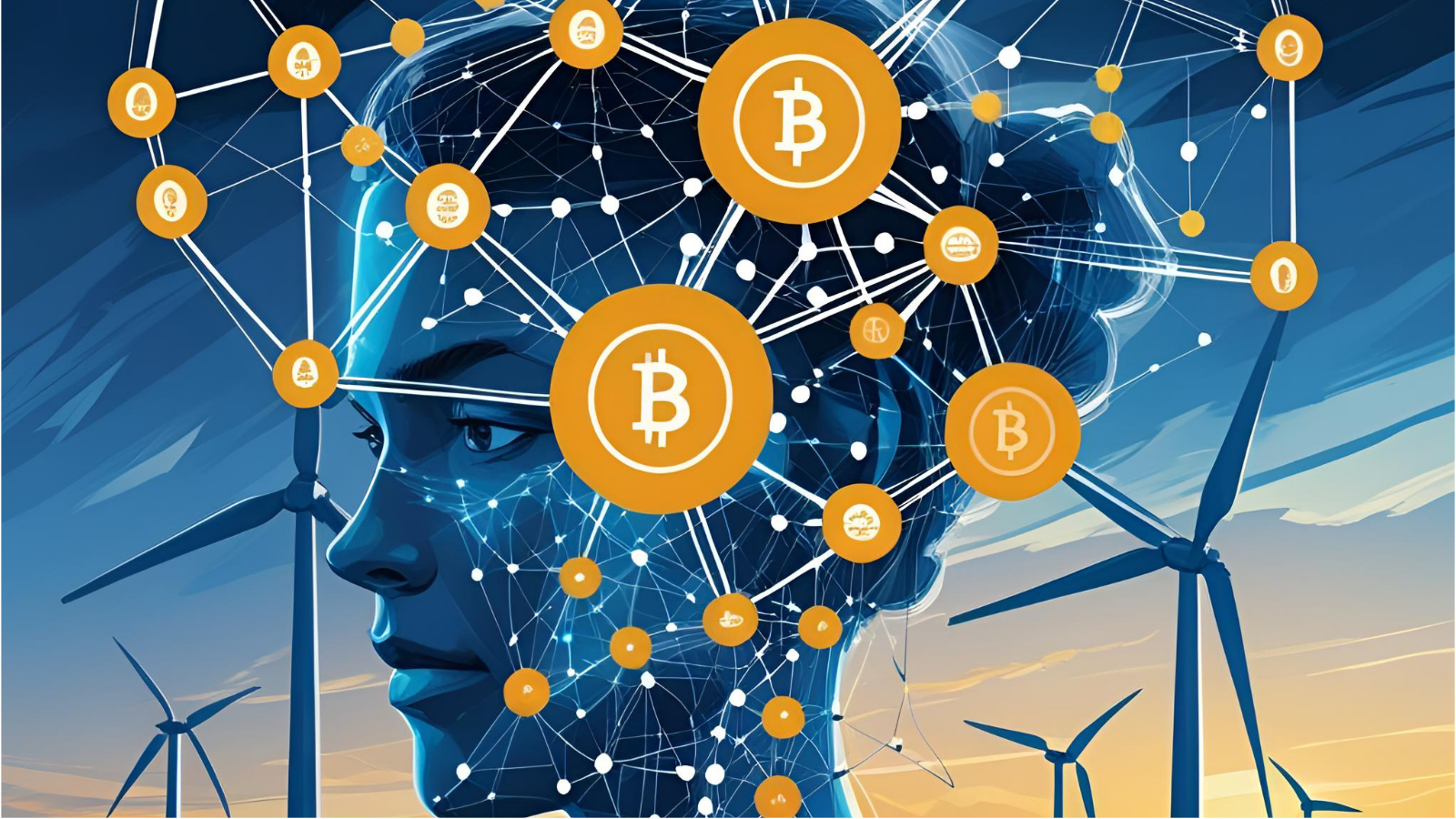
The transition to renewable energy is often constrained not by technology, but by outdated business models and centralized value chains. AIPCHAIN, an AI-integrated blockchain infrastructure, addresses this limitation by enabling decentralized, programmable, and incentive-aligned business models that better reflect the distributed nature of renewable energy. This paper explores how AIPCHAIN transforms traditional clean energy business frameworks through tokenization, automated market coordination, AI-driven analytics, and decentralized governance. By creating liquid, transparent, and data-rich energy marketplaces, AIPCHAIN empowers prosumers, enhances investor confidence, and unlocks new monetization pathways for renewable assets.
1. Introduction: The Bottleneck in Renewable Energy Growth
Despite technological maturity, renewable energy adoption remains hindered by:
- Centralized ownership structures
- Rigid pricing and subsidy models
- Limited access to capital for small-scale producers
- Regulatory and operational fragmentation
Traditional business models are designed for fossil fuel-based, centralized grids—not decentralized renewable systems. AIPCHAIN redefines this landscape by embedding market logic into a decentralized protocol, using blockchain and AI to reimagine how renewable energy is produced, priced, distributed, and rewarded.
2. AIPCHAIN’s Structural Innovations for Business Model Reform
2.1 Tokenized Renewable Assets
- Energy units (e.g., 1 kWh) are tokenized and tradable
- Asset-backed tokens can be fractionalized and used in decentralized finance (DeFi)
- Project developers can crowdfund or collateralize infrastructure through token issuance
2.2 Smart Contracts for Revenue Automation
- Transparent revenue distribution to stakeholders via programmable logic
- Removes intermediaries and ensures instant, trustless payments
- Enables usage-based micro-billing, subscriptions, or dynamic pricing
2.3 AI-Driven Energy Valuation
- AI predicts demand and generation patterns, optimizing pricing
- Forecasting enhances financial planning for both producers and investors
- Behavioral models identify efficient producers, attracting capital toward them
3. Decentralized Business Models Enabled by AIPCHAIN
| Model Type | Description |
|---|---|
| P2P Microgrid Markets | Local communities trade energy directly, bypassing utilities |
| Tokenized Infrastructure Investment | Individuals can co-own solar farms or wind parks via asset tokens |
| Dynamic Pricing Models | Prices adjust based on AI-forecasted supply and demand |
| Usage-Based Contracts | Smart contracts automate billing based on actual consumption |
| Green Impact Incentives | AI validates carbon offset and rewards producers with AIP tokens |
4. Benefits of Blockchain & AI in Clean Energy Business Models
- Liquidity: Tradable tokens create secondary markets for energy and infrastructure
- Transparency: Immutable ledgers reduce billing disputes and improve stakeholder trust
- Inclusion: Small-scale producers and retail investors can participate meaningfully
- Efficiency: AI ensures optimal resource allocation and financial planning
- Sustainability: Incentives are aligned with environmental performance and verification
5. Case Example: Solar DAO for Urban Rooftops
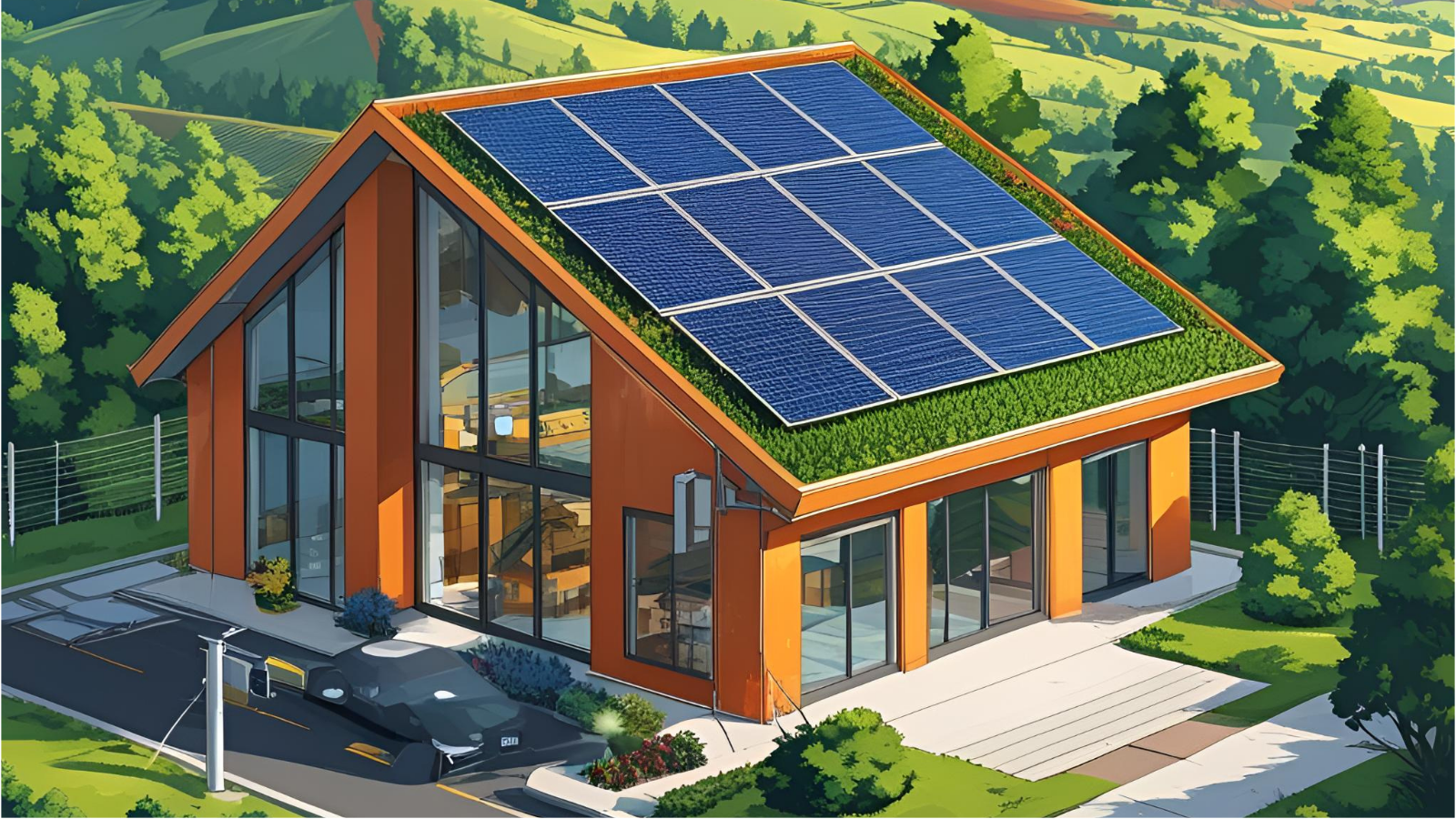
AIPCHAIN enabled a decentralized autonomous organization (DAO) for managing solar panels on urban rooftops:
- Each rooftop owner received tokens based on real-time energy output
- Revenue from energy sales was automatically split among owners, investors, and maintainers
- AI managed load balancing and determined high-impact zones for expansion
- Token holders voted on expansion proposals, creating a democratic growth model
This model reduced administrative costs by 30% and increased return on investment by 18% compared to traditional utility-owned systems.
6. Challenges and Considerations
- Regulatory Ambiguity: Tokenized asset classifications vary by region
- Grid Compatibility: Integration with legacy infrastructure requires standardization
- AI Bias & Data Quality: Ensuring fairness and reliability in prediction models
- User Education: New models require awareness and technical literacy
7. Future Directions
- Integration with Carbon Markets: Automating ESG-linked incentives and credit issuance
- Cross-Chain Asset Portability: Expanding token usability across ecosystems
- Decentralized Credit Scoring: AI-based risk profiles for green loans
- Community-Owned Utilities: DAOs that manage entire energy districts
8. Conclusion
AIPCHAIN fundamentally reshapes renewable energy business models by replacing legacy intermediaries with smart contracts, enriching market insights with AI, and distributing value through token-based incentives. This convergence democratizes energy ownership, optimizes operations, and unlocks new financial instruments for a low-carbon future. As policy, infrastructure, and digital literacy evolve, AIPCHAIN’s framework stands as a scalable blueprint for the next era of energy entrepreneurship.
9. References
- IEA. (2023). Renewables 2023: Analysis and Forecast to 2028.
- Buterin, V. (2014). Ethereum White Paper. Retrieved from ethereum.org
- PwC. (2022). Tokenization of Renewable Energy Assets.
- IEEE Xplore. (2024). Smart Contracts in Energy Markets.
- Chainlink Labs. (2023). Oracles for Energy Sector Applications.
- WEF. (2021). The Future of Clean Energy and DeFi.
- AIPCHAIN. (2025). Technical Whitepaper.
- Rocky Mountain Institute. (2022). Business Model Innovation in Clean Energy.
- MIT Technology Review. (2023). AI in Modern Energy Markets.
- OpenAI. (2024). Machine Learning for Predictive Energy Systems.