
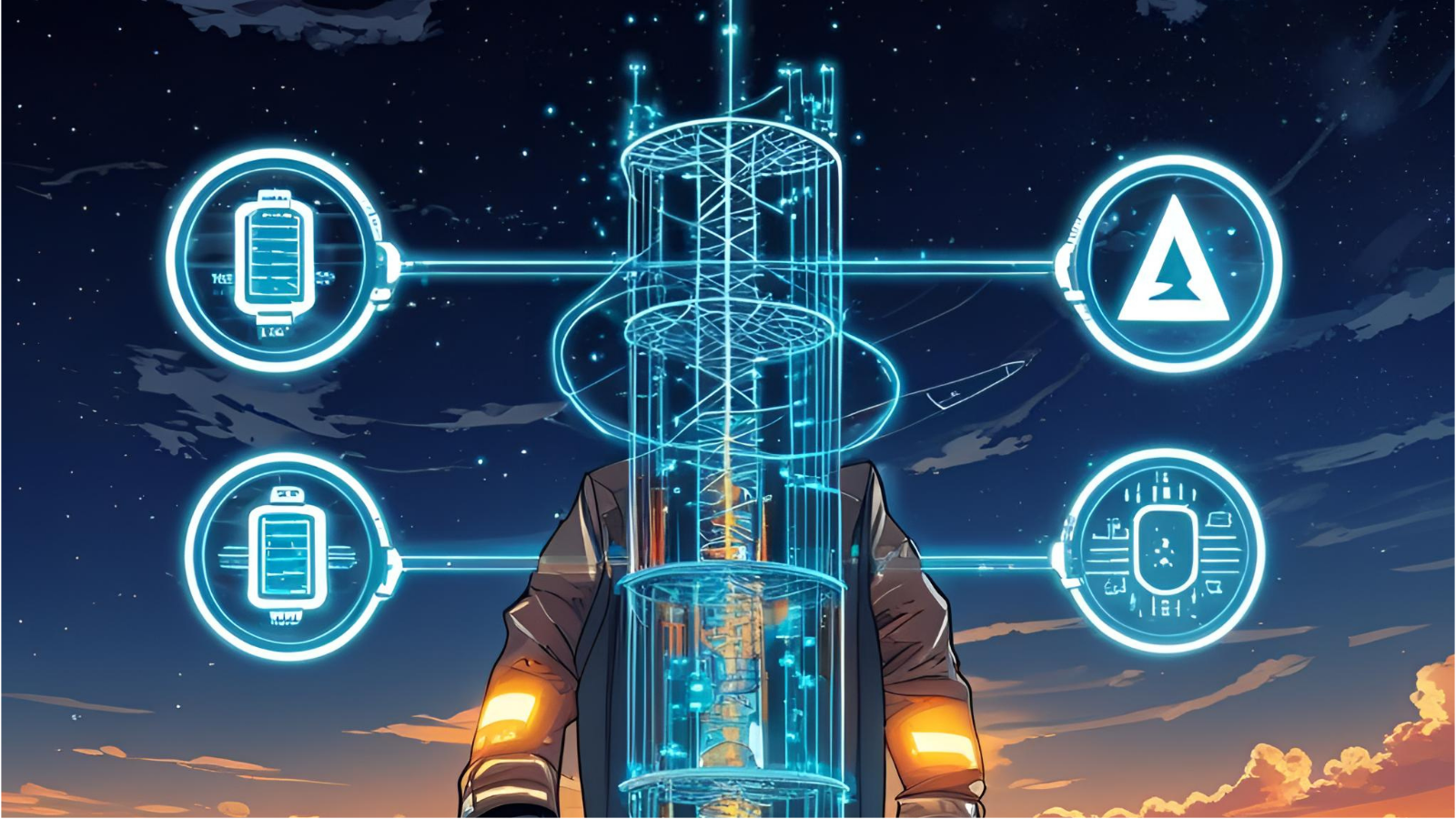
As the global energy sector undergoes digital transformation, traditional centralized infrastructure models are increasingly exhibiting limitations in efficiency, transparency, scalability, and operational cost. To address these challenges, AIPCHAIN implements an AI-integrated blockchain architecture, where blockchain technology serves as the core digital infrastructure layer, enabling data immutability, decentralized execution, and autonomous process automation via smart contracts.
The blockchain system in AIPCHAIN consists of four core components:
- Smart Contracts
- Public Blockchain Infrastructure
- Tokenization Layer
- Consensus Mechanism
Together, these components form an operating system for decentralized energy, enabling secure, permissionless, and programmable energy exchange markets.
1. Smart Contracts: Autonomous Execution of P2P Energy Agreements
Smart contracts are deterministic programs deployed on a virtual machine such as the Ethereum Virtual Machine (EVM), facilitating automated, trustless peer-to-peer (P2P) energy trading without intermediaries.
🔧 Core Functionalities:
- Automation of P2P energy contracts: Managing logic for energy exchange based on real-time data from smart meters and IoT telemetry.
- Integration of IoT-based oracles: Utilizing oracle networks (e.g., Chainlink, UMA) to validate off-chain energy production and consumption data.
- Encoding SLAs and penalty clauses: Enabling automatic enforcement of service agreements and dispute resolution mechanisms.
- Composability and modularity: Designed to interoperate with DAO frameworks, DeFi protocols, and energy NFTs.
🧠 AI-Augmented Logic:
- Reinforcement Learning agents dynamically adjust contract parameters based on user behavior and market signals.
- Anomaly detection models identify abnormal consumption or tampering in real-time.

2. Public Blockchain Infrastructure: Transparent, Immutable, and Open-Access Architecture
AIPCHAIN operates on an EVM-compatible public blockchain (Layer 1 or Layer 2) designed to optimize the trade-off between decentralization, performance, and composability.
⚙️ Infrastructure Layers:
- Execution Layer: Executes smart contract logic and facilitates high-throughput microtransactions.
- Settlement Layer: Provides finality and state verification for on-chain energy transactions.
- Data Availability Layer: Integrates with protocols like Celestia or EigenLayer to ensure scalable and verifiable off-chain data availability.
🛡️ Strategic Benefits:
- Trustless and transparent auditability of every transaction and data entry.
- Decentralized governance via token-weighted DAO voting systems.
- Cross-chain interoperability through IBC (Inter-Blockchain Communication) protocols.

3. Tokenization: Converting Energy into Digitized, Tradeable Assets
Tokenization enables the representation of physical energy and carbon assets as digital tokens, which are programmable, divisible, and exchangeable in decentralized markets.
🪙 Token Layers:
- AIP Token: The native utility token used for transaction fees, staking, governance, and incentive distribution.
- Energy-Backed Tokens (EBT): Represent 1 kWh of renewable energy, verifiably produced and logged on-chain.
- Synthetic Energy Assets: Oracle-driven derivatives representing forward contracts, energy futures, or demand hedging instruments.
- Soulbound Tokens (SBTs): Non-transferable identity-bound tokens for user energy profiles, green scores, and compliance metadata.
🧩 Extended Applications:
- Decentralized Energy Markets (DEM) utilizing AI-optimized Automated Market Makers (AMMs).
- Carbon offset NFTs tied to real-world emission reduction projects and renewable production data.

4. Consensus Mechanism: Securing Energy Transactions through Scalable and Intelligent Validation
AIPCHAIN employs a hybrid consensus model combining Proof-of-Stake (PoS) and Practical Byzantine Fault Tolerance (PBFT), enhanced by AI-driven scoring and validator evaluation.
🔄 Core Consensus Models:
- Delegated Proof-of-Stake (DPoS): Token holders delegate voting power to elected validators who secure the network and propose blocks.
- AI-based Validator Scoring: Machine learning models calculate trustworthiness scores based on node behavior, uptime, and fraud patterns.
- PBFT: Used in consortium or permissioned energy networks requiring deterministic finality and high throughput.
🧠 AI-Driven Consensus Enhancements:
- Predictive models assess the likelihood of validator misconduct or liveness failure.
- Dynamic slashing and incentive adjustments are applied based on real-time performance metrics.
References
- Buterin, V. (2014). Ethereum Whitepaper
- Wood, G. (2014). Ethereum Yellow Paper
- Chainlink Labs (2023). AI-Augmented Oracles for Energy Systems
- IEA (2022). Blockchain and Renewable Energy
- Tapscott, D. (2016). Blockchain Revolution