
Abstract
Access to reliable and affordable electricity remains a significant challenge for remote and underserved communities worldwide. Traditional grid extension projects are often economically unfeasible or logistically impractical in such regions. This paper presents a comprehensive approach leveraging blockchain-enabled microgrids to facilitate decentralized energy distribution and management. By integrating microgrid technology with blockchain’s transparency and security, AIPCHAIN aims to empower remote communities with self-sufficient energy ecosystems that operate independently of centralized national grids. This framework addresses critical barriers to electrification, including infrastructure scarcity, energy governance, and financial inclusion.
1. Introduction
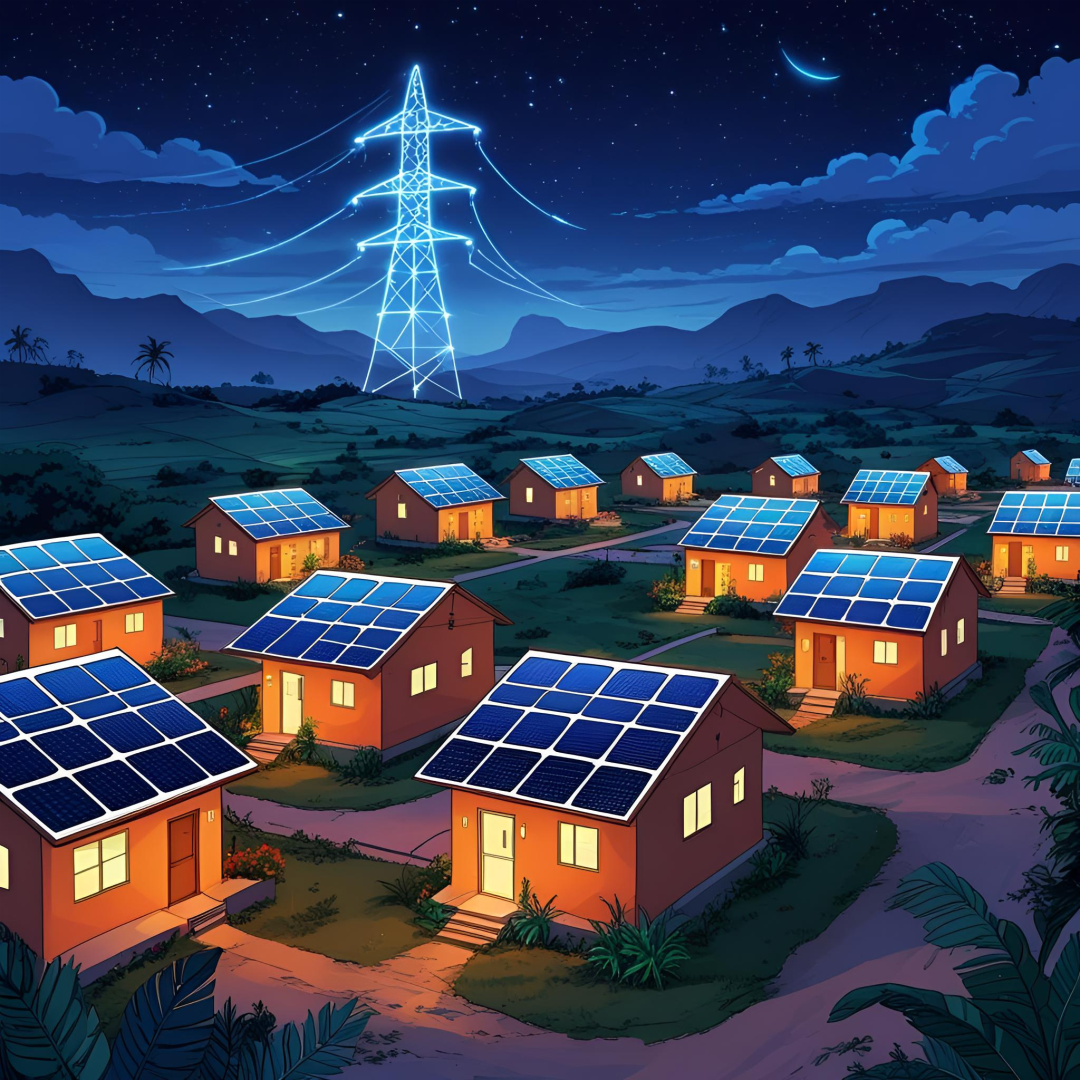
Approximately 700 million people globally lack access to electricity, predominantly residing in remote and rural areas. Conventional grid expansion is challenged by high costs, geographical barriers, and slow deployment timelines. Distributed energy resources (DERs), particularly microgrids, have emerged as a promising solution to provide localized power generation and distribution.
AIPCHAIN’s model advances this paradigm by incorporating blockchain technology to enable:
- Secure and transparent energy transactions.
- Decentralized governance and management of energy resources.
- Incentivized community participation and maintenance.
2. System Design and Architecture
2.1 Microgrid Infrastructure
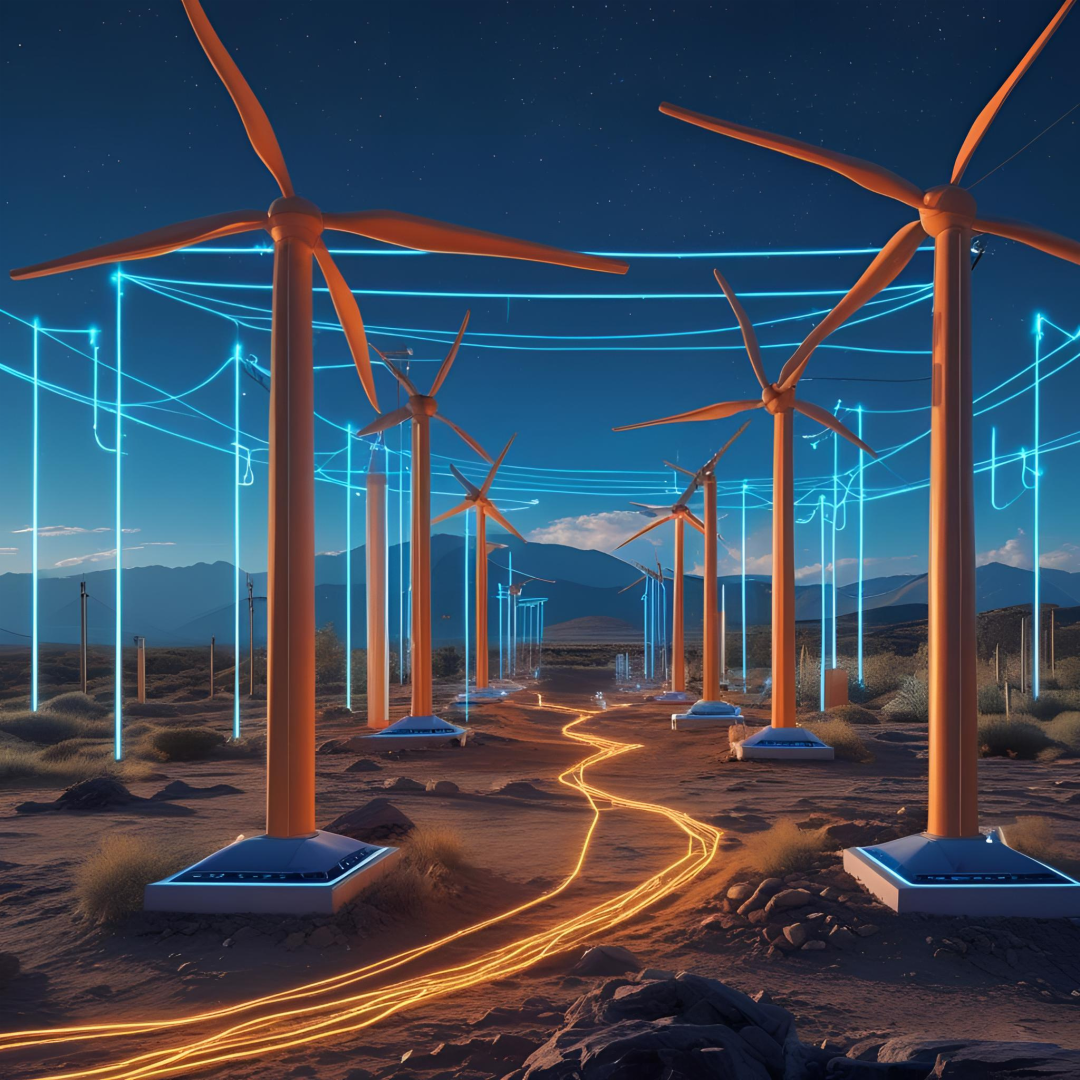
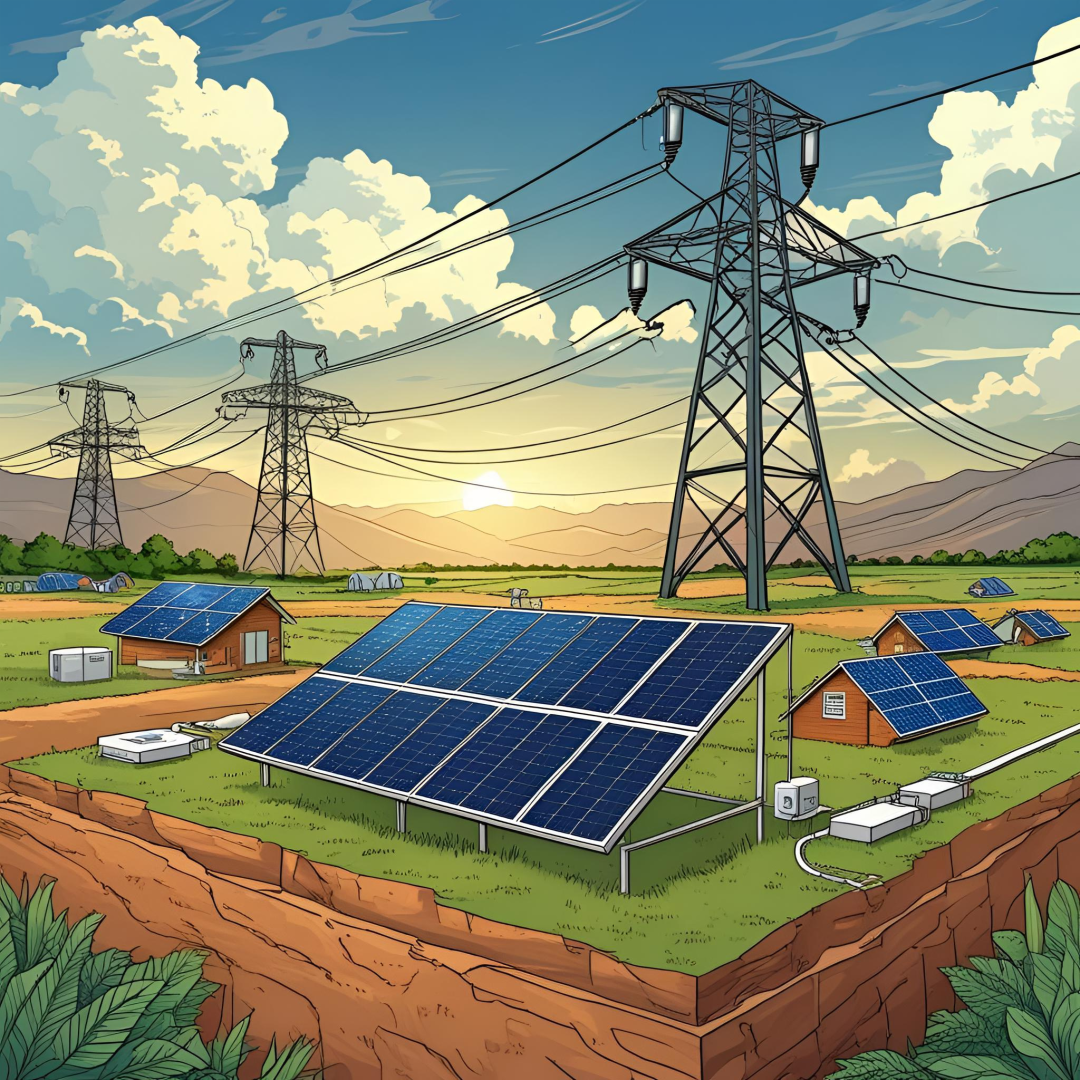
Microgrids consist of localized renewable energy sources (e.g., solar panels, wind turbines) coupled with energy storage systems. These systems operate autonomously or connect to the main grid when available, ensuring continuous power supply.
2.2 Blockchain Integration
Blockchain technology serves as a distributed ledger for recording energy generation, consumption, and financial transactions within the microgrid. Key benefits include:
- Immutable transaction history ensuring trust.
- Smart contracts automating payments and access control.
- Tokenization of energy units facilitating peer-to-peer trading.

3. Key Functionalities
3.1 Decentralized Energy Management
The system supports real-time monitoring of energy production and consumption, enabling efficient load balancing and fault detection within remote microgrids.
3.2 Community Governance
Blockchain-based voting mechanisms allow stakeholders to participate in decisions regarding tariffs, maintenance schedules, and infrastructure upgrades, fostering local ownership and responsibility.
3.3 Financial Inclusion
Tokenized energy credits enable flexible and transparent payments, reducing reliance on cash transactions and enabling credit access for underserved users.
4. Benefits for Remote Communities
| Benefit | Description |
|---|---|
| Energy Independence | Enables communities to generate and manage their own electricity without external reliance. |
| Reduced Costs | Lowers operational costs by minimizing grid extension expenses and enabling efficient usage. |
| Enhanced Reliability | Localized generation reduces outages and enhances energy security. |
| Sustainability | Promotes the adoption of renewable energy sources reducing environmental impact. |
| Empowerment | Encourages community participation and governance, boosting social cohesion. |
5. Challenges and Future Directions
- Technical Barriers: Maintenance of microgrid components in remote areas requires capacity building and robust design.
- Regulatory Frameworks: Adapting policies to support decentralized energy systems and blockchain transactions.
- Scalability: Ensuring that the blockchain infrastructure scales efficiently with increasing users and transactions.
- Interoperability: Integrating with existing energy markets and national grids as communities grow.
Future work includes implementing AI-driven energy forecasting, expanding token-based incentives, and developing interoperable protocols for seamless microgrid scaling.
6. Conclusion
AIPCHAIN’s blockchain-integrated microgrid solution offers a viable path to electrify remote regions sustainably and equitably. By combining decentralized renewable energy infrastructure with transparent, secure blockchain mechanisms, this approach reduces barriers to energy access, promotes community autonomy, and supports environmental sustainability. This framework exemplifies the future of inclusive energy systems designed to bridge the electrification gap for underserved populations worldwide.
References
- World Bank (2023). Off-Grid Renewable Energy and Rural Electrification Report.
- International Renewable Energy Agency (IRENA) (2024). Microgrids for Remote Communities.
- AIPCHAIN Technical Documentation (2025). Decentralized Energy Management with Blockchain.
- IEEE Transactions on Sustainable Energy (2024). Blockchain Applications in Microgrid Systems.