
Abstract
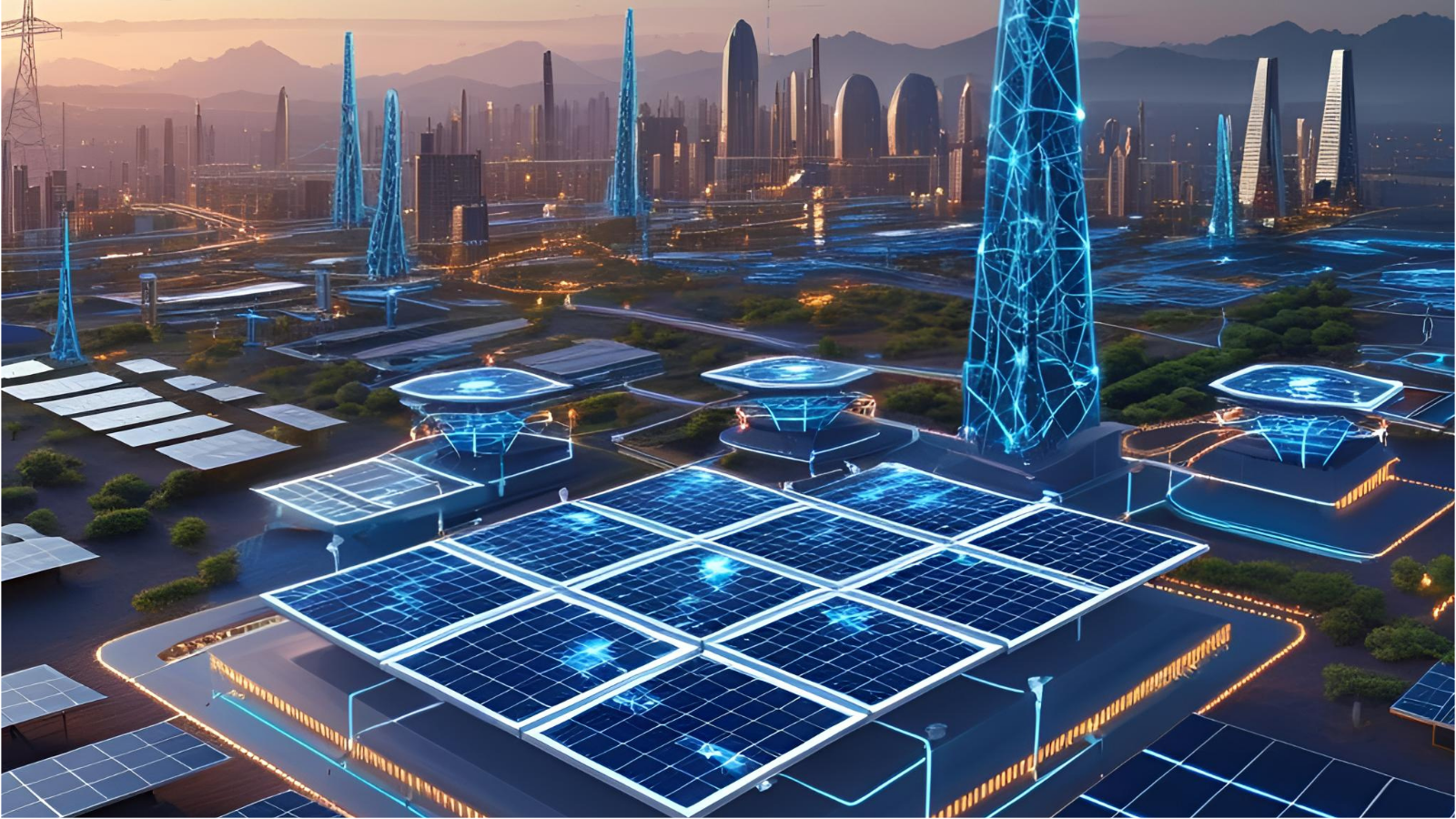
Battery and energy storage systems (ESS) are essential components in modern decentralized energy infrastructures, particularly where renewable sources dominate. AIPCHAIN integrates AI-enhanced blockchain protocols to optimize storage allocation, dispatch timing, and lifecycle management of batteries within its decentralized energy ecosystem. This paper outlines how intelligent storage coordination—using real-time data, predictive analytics, and tokenized incentives—improves system reliability, reduces energy waste, and increases the efficiency of clean energy markets.
1. Introduction: The Role of Storage in a Distributed Energy Future
The growing penetration of renewable energy—particularly solar and wind—has introduced intermittency and volatility into power systems. Traditional grid infrastructures were not designed to handle such fluctuations. Battery storage acts as a buffer between generation and consumption, stabilizing energy flows and enabling flexible supply-demand balancing.
However, legacy storage systems are:
- Centrally controlled
- Poorly optimized for localized decision-making
- Disconnected from real-time pricing and environmental signals
AIPCHAIN’s approach leverages AI and blockchain to decentralize storage coordination, allowing smart, real-time, and trustless optimization of battery use across a network of prosumers and energy nodes.
2. AIPCHAIN's Storage Optimization Architecture
2.1 Data Sources and Input Signals
- Renewable output forecasts (weather, irradiance, wind patterns)
- Local and global consumption demand predictions
- Battery state-of-health (SoH) and charge/discharge rates
- On-chain energy prices and grid congestion indicators
2.2 AI Models Used for Optimization
- Predictive Load Forecasting
- Battery Lifecycle Modeling
- Reinforcement Learning Agents
- Multi-Objective Optimization Algorithms
2.3 Smart Contract Logic
- Automate energy dispatch during price peaks
- Schedule charging during surplus generation
- Incentivize decentralized storage participation

3. Benefits of AI-Based Storage Optimization
| Benefit | Description |
|---|---|
| Efficiency | Reduces charging during peak demand and increases off-peak use |
| Grid Stability | Acts as a real-time buffer for supply-demand balancing |
| Cost Optimization | Enables arbitrage based on dynamic pricing signals |
| Battery Health Preservation | Minimizes degradation via optimized cycles |
| Environmental Impact | Maximizes renewable energy utilization |
4. Use Cases in the AIPCHAIN Ecosystem
4.1 Prosumers with Home Batteries
- Charge when prices are low or generation is high
- Sell stored energy during peak pricing periods
- Participate in virtual power plants (VPPs)
4.2 Microgrid-Level Storage Pools
- Coordinate storage via AI pricing signals
- Use token-based rewards for shared storage contributions
4.3 Emergency Grid Response
- Release emergency reserves via smart contracts
- Enable autonomous microgrids during outages
5. Integration with AIPCHAIN Tokenomics
- AIP Tokens: Payment and staking mechanism
- Energy-Backed Tokens: Represent stored energy value
- Staking Rewards: Based on reliability and responsiveness
- Penalties: For underperformance or delivery failures
6. Challenges and Future Directions
| Challenge | Proposed Solution |
|---|---|
| Battery degradation from AI overuse | Lifecycle-aware control strategies |
| High infrastructure cost | Community-owned models & DeFi-based funding |
| Interoperability | Cross-chain storage coordination |
| Regulatory clarity | zk-KYC and compliance audit layers |
Planned enhancements:
- Edge AI for low-latency decision-making
- Carbon-aware dispatching
- DAO-based governance for pooled storage assets
7. Conclusion
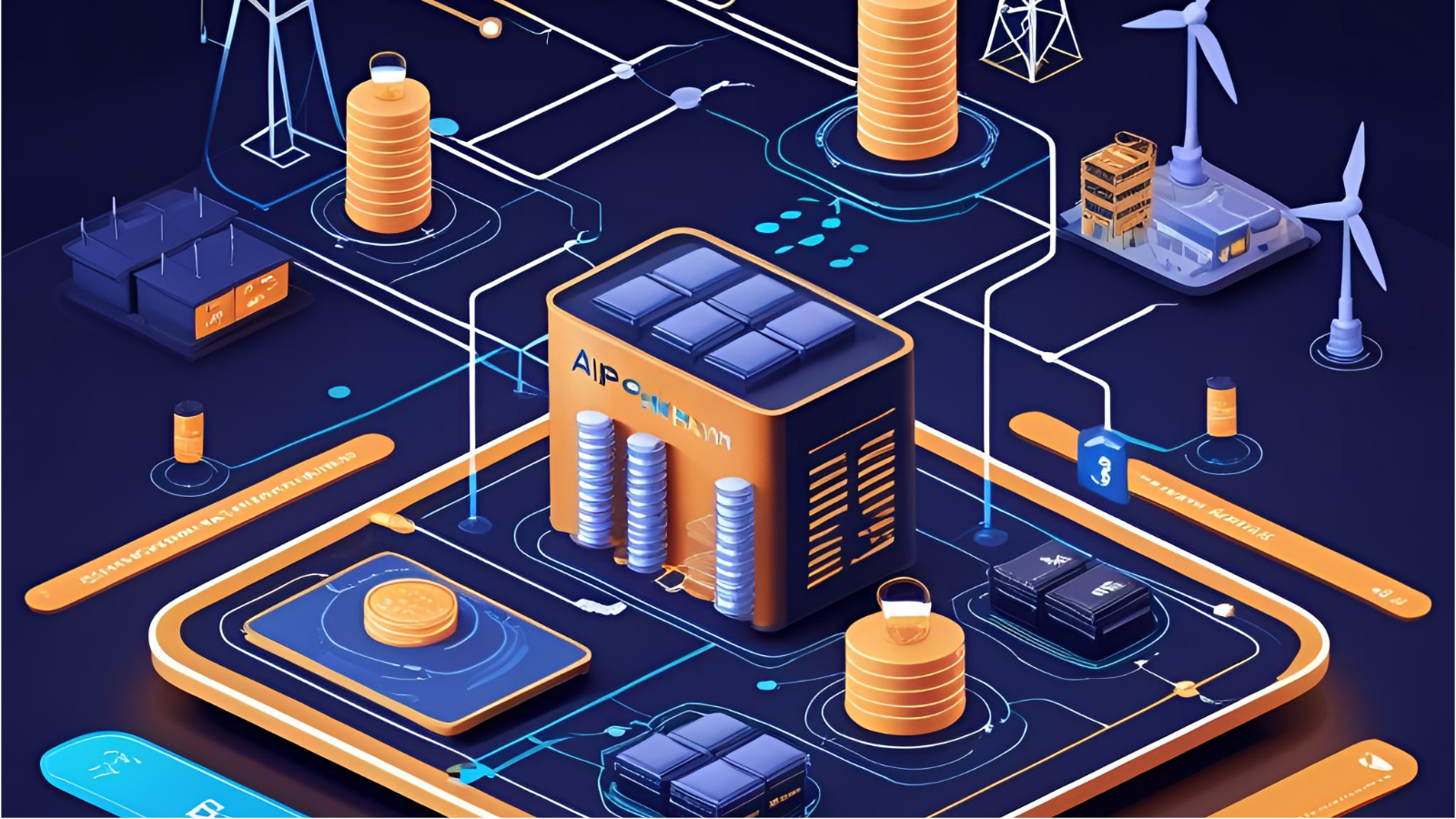
As decentralized energy networks expand, battery and storage optimization becomes critical to grid resilience and sustainability. AIPCHAIN leverages AI and blockchain to coordinate distributed storage assets in a real-time, automated, and trustless manner. By embedding programmable incentives and predictive control into smart contracts, the platform turns passive energy reserves into proactive energy market participants—unlocking a new era of decentralized energy stability.
References
- IEA (2024). Battery Storage for Renewables
- MIT Energy Lab (2023). RL in Grid-Scale Storage Control
- Chainlink Labs (2025). Oracle Networks for Smart Grids
- IEEE Transactions on Smart Grid (2024)
- AIPCHAIN Whitepaper (2025)